Chicago Maps Exhibit Closing Soon

Posted: January 21st, 2008 | Author: | Filed under: History, Maps | 2 Comments »

A diverse collection of some of the world’s most famous and interesting maps is now on display at the Field Museum of Chicago. For those in Chicago hoping to see it should hurry, as the exhibit closes January 27th. Fortunately for the rest of us, the exhibit features an elaborate online exhibit showcasing some of the cartographic treasures.

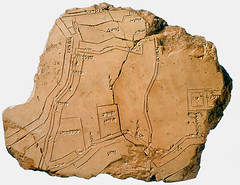
Town plan of NippurMaps featured in the exhibit include a 1300 B.C. town plan, the world’s oldest map drawn to scale (right), the world’s oldest surviving road map, a 1500 map of the road to Rome, Dr. John Snow’s famous 1855 Cholera map of London, as well as beautiful Chinese and Japanese maps.

The exhibit website and impressive 3D virtual gallery contains lots of information on these maps. My only complaint: the images are too small to examine the maps’ finer details.

Maps: Finding Our Place in the World

>> Maps: Finding Our Place in the World
>> Maps Virtual Gallery


AHA Conference Schedule

Posted: January 2nd, 2008 | Author: | Filed under: History | Comments Off

I’m attending the American Historical Association Conference this weekend, held in the Woodley Park hotels here in Washington, D.C. A list of the sessions I’m thinking of attending is below, and the asterisked ones I’ll be at for sure.

Readers may also be interested to know I’ve also applied to five PhD programs to start next fall. They are programs in history at University of Pennsylvania, University of Maryland, Northwestern and the University of Michigan, and also to the HASTS program at MIT.

Thursday, January 3

3:00 – 5:00 p.m.

Teaching Urban History

Friday, January 4

9:30 – 11:30 a.m.

Historicism and Its Limits

Tech Tools for Historians

The People’s House Roundtable

Managing Everyday Risks in the Twentieth Century: Pedestrians, the AUtomobile, and the Enclosure Movement

* De Facto Segregation: Regional Fallacies, Racial Myths, Historical Practices (M. Lassiter)

2:30 – 4:30 p.m.

Closing the “Passion Gap”

5:30 – 6:30 p.m.

Graduate Students Forum

Saturday, January 5

9:00 – 11:00 a.m.

* Hurricane Katrina and the History of Disaster (L. Vale)

Economic History of the Book in the US

11:30 a.m. – 1:30 p.m.

Learning to Teach: History Education for the 21st Century

2:30 – 4:30 p.m.

* Secure … for Whom? Campus Violence in Historical Perspective, from the Bell Tower to Blacksburg

Sunday, January 6

11:00 a.m. – 1:00 p.m.

* Historians Going Public: Taking History to Newspapers, Radio, TV, Film, Public Libraries, Web Sites, and Blogs


19th Century Scots and Your Regional Sewer Authority
Posted: November 13th, 2007 | Author: | Filed under: Government, History, Regional Planning | 2 Comments »

At the recent Society of American City and Regional Planning History conference I attended in Portland, Maine, outgoing president historian Greg Hise gave a lecture on the declining interest among academics in regions and regional planning.

In a post for Planetizen’s Interchange blog, I suggested that contrary to the views expressed at the conference there actually is a good deal of regional study and planning taking place in the U.S. I argue the reasons regions are not well studied by the academy include the exploding scale of “metropolitan” areas, the organization of records, intellectual preoccupation with the city, and and yes, the waning influence of regionalist thinkers like Lewis Mumford and Patrick Geddes.

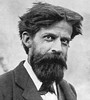
A somewhat eccentric figure, Patrick Geddes’ theories about the relationship between cities and their regions was highly influential among early planners. His “valley section,” a version of which appears below, conveys the geographic and economic scope of his theories.

Patrick Geddes Valley Section

However, his work is generally abstruse. Project Gutenberg’s copy of his 1904 text “Civics: as Applied Sociology” and his illustration below offer a taste to the curious.

Patrick Geddes Illustration

Needless to say the profession has gained a much richer perspective by moving beyond such early thinkers, however the insistence on a regional scope has been diluted.

Read more or offer your own thoughts on my Planetizen post: “Whither the Region? Good Question.”


Upcoming Conferences

Posted: October 25th, 2007 | Author: | Filed under: History, Site Announcements | 1 Comment »

I am planning to attend the following upcoming conferences:

Society for City and Regional Planning History Conference
October 25-28 – Portland, Maine ($150 for students)

Washington, D.C. Historical Studies Conference
Nov. 1-3 – Carnegie Library, Washington, D.C. (free)

American Historical Association Annual Meeting
Jan. 3-6, 2008 – Woodley Park, Washington, D.C. ($75 for students)


Do You Know UNESCO?

Posted: August 23rd, 2007 | Author: | Filed under: History | 2 Comments »

View From Table Mountain

Quick, can you name the 20 sites in the United States designated by the United Nations as World Heritage Sites?

Robben IslandIf you are like me, the answer is probably no. On my trip to South Africa, I was struck by how proud that country is of its 8 sites, which includes Robben Island and the Cape Floral Region, both seen here. Since 1972, the United Nations Educational, Scientific and Cultural Organization (UNESCO) has sought to identify, protect, and preserve natural and cultural sites around the world of “outstanding value to humanity.” The list currently contains 660 cultural, 166 natural and 25 mixed properties in 141 countries. (The UNESCO website is also quite good, with an interactive map and RSS feeds)

For the record, here’s the U.S. sites that made the list, along with the year of their addition.

Cultural: La Fortaleza and San Juan National Historic Site in Puerto Rico (1983), Cahokia Mounds State Historic Site (1982), Chaco Culture (1987), Independence Hall (1979), Mesa Verde National Park (1978), Monticello and the University of Virginia in Charlottesville (1987), Pueblo de Taos (1992), Statue of Liberty (1984)

Natural: Carlsbad Caverns National Park (1995), Everglades National Park (1979), Grand Canyon National Park (1979), Great Smoky Mountains National Park (1983), Hawaii Volcanoes National Park (1987), Kluane / Wrangell-St Elias / Glacier Bay / Tatshenshini-Alsek (1979), Mammoth Cave National Park (1981), Olympic National Park (1981), Redwood National and State Parks (1980), Waterton Glacier International Peace Park (1995), Yellowstone National Park (1978), Yosemite National Park (1984)

Americans may be more familiar with the National Park Service’s roughly 2,400 National Historic Landmarks, or the much larger National Register of Historic Places, which contains 96,373 entries and counting.

> UNESCO World Heritage List
> U.S. National Register of Historic Places

jpeg.JPG
The best feature about the utah ski resorts is the standard of luxury they offer. Although the atlantis resort is a very nice place too, but it does not match the grandeur of the palace resort or the standards of the ones in utah. The place even fulfils your spa requirements.


Calling in the Feds

Posted: August 3rd, 2007 | Author: | Filed under: Government, History | Comments Off

Under Article IV, Section 4 of the U.S. Constitution, the federal government is ordered to protect the states from invasion, and upon request from state governors or legislature, protect them from “domestic violence.” Article 1, Section 8 requires Congress to call forth troops to “execute the Laws of the Union, suppress Insurrections and repel Invasions.”

Subsequent federal laws have further described when federal troops can be mobilized in the states. The Stafford Act gives the president broad powers to use federal resources during a disaster, however the Posse Comitatus Act prohibits the Army or Air Force from engaging in law enforcement in most situations. The Insurrection Act allows the president to mobilize, in response to a state request, federal troops in order to suppress “insurrection, domestic violence, unlawful combination, or conspiracy,” in situations where state law enforcement is compromised. In 2006, this law was re-named the “Enforcement of the Laws to Restore Public Order” act and was amended to give the president to order troops to function as law enforcement without a state request during time of emergency.

Disturbingly, outside of this legislative framework, the Congressional Research Service reports that the Department of Defense has adopted a policy to authorize “prompt and vigorous Federal action, including use of military forces, to prevent loss of life or wanton destruction of property and to restore governmental functioning and public order,” when local authorities are overwhelmed.

I discovered a partial list of times the Constitution’s domestic violence clause has been invoked as an appendix to the Kerner Commission report, which also appears in Deputy Secretary of Defense Cyrus R. Vance’s report. I have edited the original descriptions slightly for length and added several post-1968 events. (The original is here.)

STATE REQUESTS FOR FEDERAL ASSISTANCE IN SUPPRESSING DOMESTIC VIOLENCE
A Chronological List of Major Requests

1838 – Buckshot War. President Van Buren requests request for federal assistance when violence results from bitter political contest.

1842 – Dorr Rebellion. President Tyler refuses to dispatch troops to protect Rhode Island Governor King from insurgent Dorr.

1856 – San Francisco Vigilance Committee. California requested assistance to stop the Committee from usurping the authority of the State. President Pierce took no action on the advice of his attorney general.

1873-1875 – New Orleans unrest. President Grant dispatches two regiments of troops to New Orleans during reconstruction to protect the Republican government from a Democratic white militia, and in 1875 to protect the government from a white coup d’état.

1876 – South Carolina riots. Violence between the Ku Klux Klan and black state militia prompts the president to station troops at 70 places in the state to oversee the election.

1877 – Railroad Strike riots. President Hayes issues proclamation to West Virginia, Maryland, Pennsylvania, and Illinois to restore order. Ohio receives federal arms. Michigan, Wisconsin and California also made requests for help.

1892-1899 – Idaho’s Coeur D’Alene mining disturbances. Presidents Harrison, Cleveland and McKinley provide Idaho Governors assistance to quell labor violence.

1894 – Coxey’s Army of unemployed. President Cleveland instructed the army to assist Montana in quelling violence in Coxeyite contingent in Montana.

1903 – Colorado mining strike disturbance. President Theodore Roosevelt denies request to Colorado Governor to provide assistance during mining strike.

1907 – Nevada mining disturbance. President Roosevelt orders troops to assist state authorities to maintain order.

1914 – Colorado coal strike. President Wilson sent troops to stop rioting after negotiations for peaceful resolutions fails.

1919 – Race riots in Washington, D.C. and Omaha; Gary steel strike. Secretary of War instructs troops to respond to state requests.

1921 – West Virginia coal mine warfare. President Harding responds to a request by the West Virginia governor and Federal troops disarm striking miners.

1932 – The Bonus Army. Needy veterans camping in Washington are dispatched by federal troops. (No state request)

1943 – Detroit race riots. Federal troops dispatched to Detroit to keep the peace after race riot.

1957 – President Eisenhower sends federal troops to Little Rock to keep the peace during the integration of Little Rock High School. (No state request)

1963 – President Kennedy orders federal troops to Oxford, Mississippi to quell riots caused by the integration of University of Mississippi. (No state request)

1967 – Detroit riots. Federal troops dispatched to Detroit in July 1967 at request of governor to stop rebellion.

1968 – Washington, D.C. Martin Luther King, Jr. Rebellion – The federal government mobilizes troops to protect federal buildings and keep order.

1971 – May Day Protests – President Nixon mobilizes thousands of federal troops to keep the government open when anti-war activists tried to close the government through a mass protest.

1989 – Hurricane Hugo. The president sends federal troops to St. Croix, Virgin Islands to control violence and looting under the powers of the Insurrection Act.

1992 – Rodney King uprising. California Governor Pete Wilson requests and receives federal assistance to quell violence erupting after the acquittal of police officers accused of beating Rodney King.

2005 – Hurricane Katrina in New Orleans. Louisiana Governor Kathleen Blanco requests and receives 40,000 federal troops for evacuation and security efforts in the state.

While I have included some notable examples, this list does not include many times federal authorities have been mobilized in states or territories without state requests, including the Whiskey Rebellion, Utah War, Indian Wars (including Wounded Knee I and II), standoffs with various groups, raids on Black Panthers and other political organizations, etc.

> Congressional Research Service: The Use of Federal Troops for Disaster Assistance: Legal Issues (PDF)
> The New Yorker Comment by Nicholas Lemann: Insurrection
> Sen. Patrick Leahy: Insurrection Act information

The photos are from a set taken by my friend Eric during his September 2005 relief deployment to New Orleans with the 3-505 82nd Airborne.


Understanding the 1960s ‘Civil Disorders’

Posted: August 1st, 2007 | Author: | Filed under: District of Columbia, History, Public Policy, Urban Development | 5 Comments »

In the summer of 1967, violence broke out in African American neighborhoods in 164 American cities, including major events in Buffalo, Cincinnati, Detroit, Milwaukee, Minneapolis, Newark, Plainfield (N.J.), and Tampa. In April 1968, after the assassination of Dr. Martin Luther King, Jr., violence was recorded in over 100 cities, including major events in Washington, D.C., Chicago, and Baltimore. Affected neighborhoods saw arson, looting, and clashes with law enforcement.

After the summer of 1967, which featured a week-long incident in Detroit which left 43 dead, President Lyndon Johnson appointed a presidential committee to study what had happened in American cities that summer. Headed by former Illinois Governor Otto Kerner, the committee published their report the following spring. The Kerner Commission Report is a 600-page result of of exhaustive research into the events and their causes. Unfortunately, too often all that is mentioned about the report is its most famous line, which declared that “Our nation is moving toward two societies, one black, one white—separate and unequal.” However it contains a richly detailed story and has much to tell us about that summer.

In commemoration of the 40th anniversary of the events of the late 1960s, both major Detroit newspapers have printed dozens of stories about the event this summer, analyzing the event and its relevance to Detroit today. Already discussions have started about historical studies and events to correspond to the 1968 event in Washington.

What do we know about these events, and what has been their impact?

First, there’s the issue of what to call them. Most sources refer to them as “riots,” or at times “race riots.” However, unlike in other “race riots” when various racial groups were quite literally fighting in the streets, the participants of these events were mostly (although not exclusively) African American, and the activities were not specifically directed at people of other racial groups. Furthermore, the word “riot” itself seems inadequate. Meaning “a violent public disorder,” the word strips the events of any historical or political significance. This seems unsatisfactory — after all, the 1968 events occurred immediately in response to Dr. King’s death, and as we will see the community’s stated grievances were painfully valid.

Others suggest a better term might be “police riot.” While police behavior certainly played a major role in instigating and worsening the riot, as well as contributing to a large degree to the violence (particularly in Detroit), this term also seems too limiting to fully describe the events.

Finally, there are those who prefer the term “rebellion.” This term seems to come closest, meaning “opposition to one in authority or dominance.” After all, the violence of the riot was often directed towards symbols of political or economic authority. However, I still find the term somewhat unsatisfactory. After all, in historical terms rebellions are often organized affairs with leaders and some amount of strategy. The Kerner Commission specifically found no organization or conspiracy. The commission itself adopted the neutral-sounding term “Civil Disorder.”

Despite the occasionally apocalyptic scale of “the riots” in popular memory, the events in most cities were limited. The Kerner commission report itself reports that while the events are highly significant, the extent of disorder has been “exaggerated,” concluding three-fourths would not be nationally-newsworthy in previous years. Even in cities where violence was the worst, looting was generally limited to specific streets, with sporadic events elsewhere. It generally took just a few days for authorities to regain control. In Detroit, the worst of 1967, control was restored in roughly 4 days.

The connection of the events to “white flight” has been exaggerated. Migration to the suburbs began in earnest in the late 1940s, continuing more or less smoothly to almost the present day. (Washington only stopped its population decline in the 2000s, and most other major cities’ population continued to decline up through the 2000 census). The trends in these graphs were well established before the late 1960s.

Population, Detroit and Southeast Michigan

D.C. Population

As historian Kevin Boyle pointed out in an op-ed in the Washington Post, the grievances that caused the riots are historically well documented:

In retrospect, Americans should have seen the riot coming. Since the 1920s, not just Detroit but all of the nation’s major cities had restricted blacks to the oldest, most decrepit neighborhoods available. Segregation inevitably spawned discrimination: Schools in African American areas were overcrowded and underfunded; city services were delivered sporadically; policing was frighteningly oppressive.

Then, in the 1950s and 1960s, the urban black economy tumbled into crisis, as decent-paying factory work started to disappear. From 1947 to 1967, Detroit alone lost 120,000 manufacturing jobs. In the city’s ghetto, unemployment skyrocketed. Poverty intensified. And under the strain of it all, life on the streets became more dangerous. There were 112 murders in Detroit in 1946. In 1966, there were twice as many, a sure sign of a horribly strained social fabric.

Tom Sugrue ends his excellent Origins of the Urban Crisis on the eve of the rebellion there, underscoring its role as merely a small capstone to long-building historical forces of injustice at work in that city. In their quest to determine causes, the Kerner Commission conducted a public opinion survey in 15 cities and conducted over 1200 interviews. They reported finding similar major grievances in almost every city, and organized them into categories. The top three: police practices, unemployment and underemployment, and inadequate housing.

The others were inadequate education, poor recreational facilities and programs, political unresponsiveness, white racism, discrimination in the administration of justice, inadequacy of federal programs, inadequacy of municipal services, discriminatory consumer and credit practices, and inadequate welfare programs. The report also points out that in the cities surveyed, none had ever had a black mayor, only three had more than one black legislator, and in only 4 did blacks hold any important municipal positions.

The immediate impact of the events had to do with commercial businesses and real estate. Most of the streets impacted saw businesses close and buildings lost due to immediate damage or subsequent disinvestment and neglect. In Washington in particular, the event accelerated the existing trend of the shift of retail to auto-oriented shopping centers and the death of specialized independent shops along crowded retail corridors. The damage from the event and the urban redevelopment responses has had a profound and lasting impact on the city’s geography. As a result, the Metro’s Green Line was re-routed, urban renewal schemes created the vacant land that was to be used later for the convention center, and the riot-damaged corridors absorbed large numbers of subsidized public housing buildings. Some affected corridors suffered less than others, and I imagine each neighborhood which saw violence in the late 1960s has a slightly different story.

Without excusing the actions of individuals, we must be able to critically examine the causes of the events of the late 1960s if we ever hope to prevent their re-occurrence. The sad persistence of similar events in our cities in the years since only underscores this need.

> W. Post: Kevin Boyle op-ed “The Fire Last Time
> Wikipedia: Lists of incidents of civil unrest in the United States
> Detroit News Special Report: Panic in Detroit
> Detroit Free Press: Lessons From the ’67 Riot
> Freedom Road: “Burn, Baby, Burn”
> Rutgers U.: 1967 Newark and Detroit Riots Website

The first photo is of Chicago from April 6, 1968, posted by Flickr user Andros47, the second of Washington, D.C., also from April 1968, was posted by Richard Layman.

Blog Widget by LinkWithin